Every call you miss at peak service is a table walking to your competitor
It's 8:15 on a Friday, the dining room is full and the phone is buzzing with nobody to pick it up. Whoever called is already booking somewhere else.
In this article
- Why the phone rings at the worst possible moment
- What each missed call costs you
- Three fixes that don't work
- The fix that actually scales: answering without answering
- What the message should say
- How to set it up in an afternoon
- What to measure to know if it works
- Mistakes that ruin the automation
- Frequently asked questions
- What I would do this week
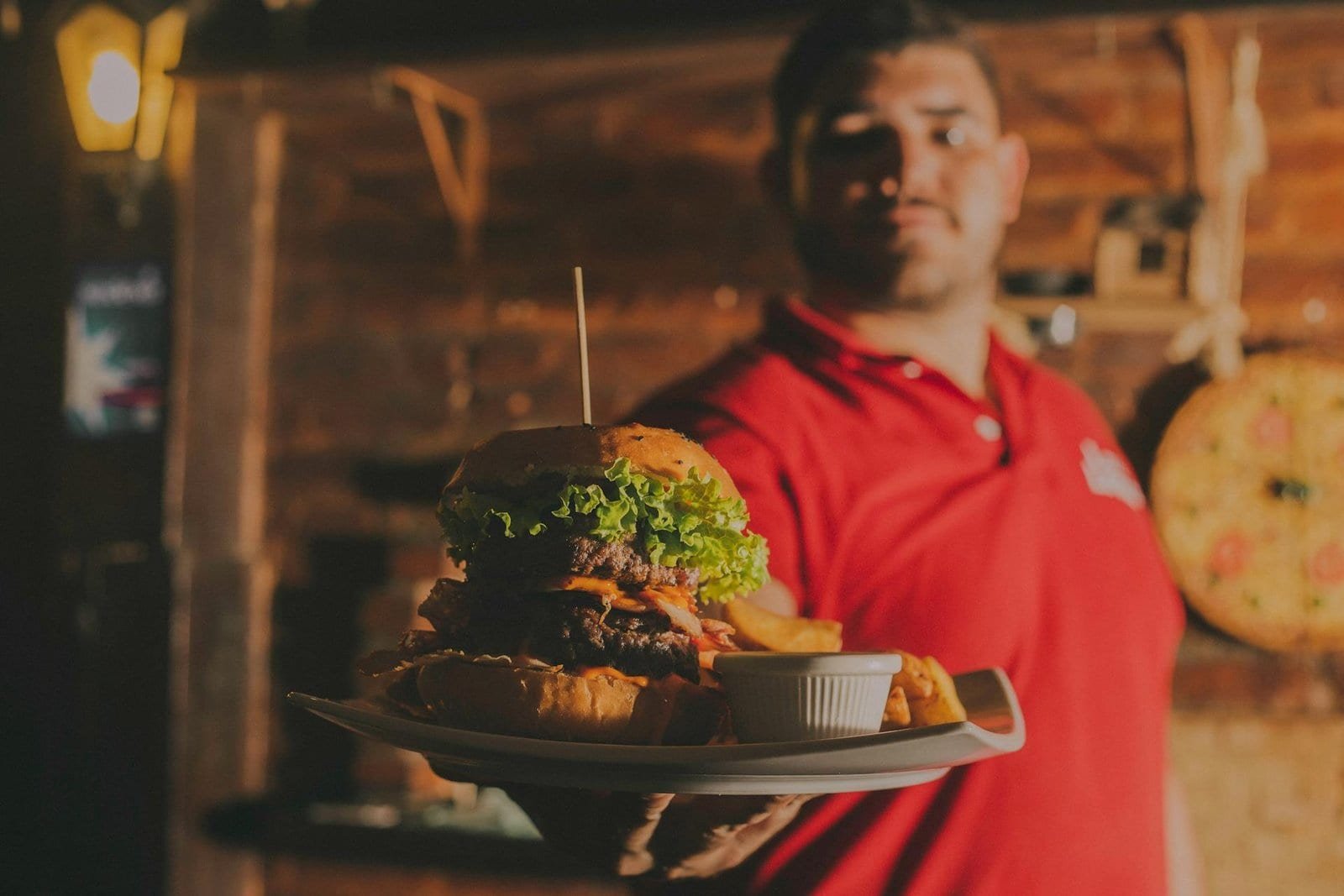
It's 8:15 on a Friday. The dining room is full, servers are crisscrossing the floor, the kitchen has fifteen open tickets and the phone is buzzing on the counter by the register. It buzzes four times. Nobody looks. The person calling wanted a table for six on Saturday.
That customer doesn't leave a voicemail. They hang up, open Google and call the next restaurant on the list. Ten minutes later they have a table. And you will never know they existed.
This article isn't about answering faster. It's about letting the system answer for you, and about deciding with numbers whether it's worth it.
Why the phone rings at the worst possible moment
It isn't bad luck. It's how demand works in a restaurant.
People decide to eat when they're hungry or when they're planning the weekend, and both of those happen in the same windows in which you're serving: between 1:00 and 3:00 pm, and above all between 7:30 and 10:00 pm.
The result is a schedule collision: your capacity to answer the phone is at its lowest exactly when call volume is at its highest.
| Time window | Incoming calls | Answering capacity | What happens in practice |
|---|---|---|---|
| 11:00 am–12:30 pm | Low | High | Almost everything gets answered, but few callers really intend to book. |
| 1:00–3:00 pm | Medium-high | Low | The phone competes with lunch service. |
| 7:30–10:00 pm | High | Very low | This is where most of the next day's bookings are lost. |
| 10:00 pm onward | Medium | None | Nobody answers because the restaurant is closing or already closed. |
There's a second factor almost nobody considers: people who call at peak hours usually have high intent. They aren't researching the competition; they want a specific table on a specific day. It's the most valuable call of the day, and it's the one that gets answered least.
Check it yourself before you accept this diagnosis. Open last month's call log and count how many came in between 7:00 and 10:00 pm, and how many lasted under 20 seconds. Short calls are almost always bookings that walked away.
What each missed call costs you
The number isn't “a lot.” It's calculated.
The value of a missed call is:
guests × average ticket × the odds that the person books
Probability matters. Not everyone who calls books, and not everyone who books would have spent the average ticket. If you assume 100% conversion, the math gives you a big, false number, and that's why so many decisions get made with fear or optimism instead of data.
With round figures and a 60% probability, three scenarios:
| Scenario | Missed calls / week | Guests | Ticket | Weekly loss | Annual loss |
|---|---|---|---|---|---|
| Small restaurant, 40 seats | 3 | 3 | 18 USD | 97 USD | 5,050 USD |
| Mid-size restaurant, 90 seats | 6 | 3.5 | 24 USD | 302 USD | 15,700 USD |
| Restaurant with a patio and events | 10 | 4 | 28 USD | 672 USD | 34,900 USD |
These are illustrative figures, not an industry average: every restaurant has its own ticket and its own call pattern. What is universal is the structure of the calculation, and the fact that the result almost always exceeds the cost of an automation tool.
And there's a loss that doesn't appear in the table: the new customer who never calls again. A table of four you lose today can be a table of four every two months for three years. The booking isn't the value; the relationship is.
Three fixes that don't work
1. Hiring someone just for the phone
It's the first idea, and almost always the most expensive one. A full-time front desk role costs, depending on the country, between one and three minimum wages plus payroll taxes. To justify it you would need to recover that much in bookings every month, and call volume rarely reaches that figure.
The role also brings turnover, vacations and shifts. On Friday at 8:15 pm the problem is still there, because at that hour the person is in the same packed room as the rest of the team.
2. Letting a server answer “when they get a chance”
Here the cost isn't the wage, it's the experience. A server who interrupts service to take the phone takes longer to run food, loses track of the tables in their section and talks to one customer half-heartedly while table 7 waits for the check.
A phone answered that way creates two problems: the booking gets written down badly (no party size, no exact time) and the table that did sit down gets worse service.
3. Leaving it alone and trusting voicemail
Voicemail solved this in 2005. Today most people hang up without leaving anything: texting or calling another restaurant is faster than recording a message. A full inbox isn't a recovery strategy; it's a record of losses.
| Option | Monthly cost | Coverage | Effect on service |
|---|---|---|---|
| Full-time receptionist | 1–3 wages + payroll taxes | Business hours | Neutral |
| Server answers | 0 | Partial and inconsistent | Negative |
| Voicemail | 0 | None in practice | Neutral, but you lose bookings |
| Automatic reply + booking link | A tool, not a salary | 24/7 | Positive: nobody interrupts the floor |
The fix that actually scales: answering without answering
The idea is simple: when a call comes in and nobody picks up within X seconds, the system sends a text message to that number, automatically. The person gets a reply in under a minute even if the restaurant is closed.
The feature is known as Missed Call Text Back (an automatic text back after a missed call) and it exists on several CRM and automation platforms. One of them is GoHighLevel, which has it built in alongside the booking calendar, text messaging and the contact record in a single profile.
The full flow:
- The call comes in. It rings on the restaurant's number, which is connected to the platform.
- Nobody answers within X seconds. You set the time: 15, 20, 30 seconds.
- The message goes out. The customer receives a text with the restaurant's name and a direct link to the booking calendar.
- The customer chooses. Day, time and party size, on a simple screen, without downloading anything or creating an account.
- It gets recorded. The booking lands in the calendar, the contact is saved with a tag and the team sees the table on their schedule.
What makes this work isn't the technology, it's the speed. A customer who calls and gets a message in 40 seconds is still interested. The same customer, two hours later, has already booked somewhere else.
If what hurts most is no-shows rather than calls, the other half of the system is in the article on no-shows: it gets solved with reminders, not with more phone answering.
And to be honest about the limits: GoHighLevel is not a POS. It doesn't send tickets to the kitchen, it doesn't manage your table map and it doesn't replace the booking platform you already use. If you pay for OpenTable, CoverManager, SevenRooms or similar today, don't migrate just to migrate: the message can point to your current system's link, and the CRM keeps the follow-up and campaign side.
What the message should say
A badly written automatic message is worse than sending nothing: it looks like spam. Three principles:
- One line of context. Anyone should understand in two seconds where the message comes from.
- One action only. One link, not three options.
- Short. Under 320 characters; ideally, two lines on a phone screen.
Bookings. “Hi, this is Casa Marta. We couldn't pick up your call because we're mid-service. Book in 30 seconds here: [link]. If you prefer, reply to this message with a day, time and party size.”
Takeout orders. “Casa Marta: we missed your call. Order for pickup or delivery at this link: [link]. Your order is confirmed instantly.”
Groups and events. “Casa Marta: thanks for calling. For groups of more than 8 people and for events, tell us the date and party size here: [link] and we'll come back with a proposal today.”
What it should never say: “call us back,” “we're busy,” “try again later.” Every one of those phrases puts the work back on the customer, which is exactly what made them leave.
| Weak message | Useful message |
|---|---|
| “We couldn't take your call. Call us later.” | “We couldn't take your call. Book here in 30 seconds.” |
| No restaurant name | Restaurant name in the first line |
| Link to the homepage | Direct link to the calendar or the order form |
| Three options and a phone number | One action and the option to reply to the message |
One legal detail that gets overlooked: the message has to go to people who gave you their number with consent, and it has to include a way to opt out (replying STOP, for example). If a customer called you, replying to that call is legitimate; mass campaigns are a different conversation.
How to set it up in an afternoon
This isn't a three-month project. With access to your number and to the platform, it's two to four hours of setup.
- Decide on the number. You can use your current number with call forwarding or a new number dedicated to bookings. Put it on the menu, on Google and on social media before you change anything.
- Set the hours. Turn on replies 24/7 or only outside business hours. For a restaurant with a nighttime peak, 24/7 is the reasonable choice.
- Set up the calendar. Make the “party size” field mandatory and cap bookings per time slot by your real capacity, not by what you wish it were.
- Write the templates. One per case: standard booking, groups, orders. Use the restaurant name exactly as it appears on Google.
- Add the right link. It should open the calendar, not the homepage. Every extra click loses between 20% and 40% of people.
- Test it on your own phone. Call from a number that isn't the restaurant's, don't answer and time how long the text takes to arrive.
- Tell the team. Your people need to know that bookings come in on their own and that someone has to check the schedule when the shift starts.
- Measure at 14 days. Without measurement, the tool becomes just another expense.
What to measure to know if it works
Before you calculate the return, make sure your margin can carry the investment. Diagnostic 360 gives you prime cost, break-even point and margin in ten minutes.
| Metric | How it's calculated | What it tells you |
|---|---|---|
| Missed calls | Call log for your number, by time window | Sizes the problem before and after |
| % of automatic replies sent | Messages sent / missed calls | Whether the setup is done right |
| Bookings created from the link | Bookings with the source “missed call text” | The real return, not the potential one |
| Average ticket of those bookings | Revenue / bookings recovered | Whether you attract profitable tables or just covers |
| Time to the first message | Call-to-text gap | It should stay under 60 seconds |
| Cost per recovered booking | Monthly cost / bookings recovered | Whether the tool pays for itself |
The return math is straightforward. If the tool costs 100 USD a month and you recover 8 bookings of 2.5 guests at a 24 USD ticket, that's 480 USD in extra revenue. At a 30% margin, net income would be around 144 USD: it barely covers the cost. Volume is what makes the difference: in the scenario with 10 calls a week, the same setup returns three or four times its cost.
Mistakes that ruin the automation
- Generic platform message. If the text doesn't say the restaurant's name, it looks like phishing.
- Link to the homepage. The customer already decided; don't make them search again.
- No party size. A booking without a guest count is half a booking: nobody knows which table to set.
- Unlimited booking slots. The calendar takes 12 bookings for a slot with 8 tables and Friday turns into an argument at the door.
- Automate and forget. Nobody checks whether the messages go out, whether the link works or whether the calendar is still open on holidays.
- Chasing the customer. One message and, if they don't reply, one follow-up the next day. Anything more than that is harassment.
Frequently asked questions
Does an automatic text bother the customer?
It bothers them when it arrives late or when it has nothing to do with what they asked for. If it replies to their call in under a minute and offers exactly what they were looking for, it reads as service. Most restaurants that implement it report that the message gets read and used.
Does it work outside the restaurant's opening hours?
Yes, and that's where it pays off most: Saturday bookings get decided on Friday night, when the restaurant has already closed. Without an automatic reply, that call is lost for good.
Do I need to change the restaurant's number?
Not necessarily. You can connect your current number through call forwarding or use a new number just for bookings. If you go with the second option, update Google Business Profile, the website and social media the same day.
What if the customer would rather talk to a person?
The message should offer that way out: “reply to this message and we'll call you.” What matters is that the conversation starts, not that it happens over text.
Does it work for takeout orders too?
Yes. Swap the link for your ordering menu and adjust the copy. In fact, with orders speed matters even more: whoever calls to order is usually deciding between two or three places.
How much does a tool like this cost?
CRM and automation platforms with this feature usually start around 100 USD a month on their basic plan, with separate charges for texts and for the phone number. Compare it with the value of the bookings you recover, not with the price of a coffee.
What I would do this week
- Today: review the call log for the last 30 days and count the calls that came in between 7:00 and 10:00 pm.
- Tomorrow: multiply by your average ticket and by a conservative probability (50–60%). That's the money leaking out.
- Day 3: decide whether the number justifies automating. If the math doesn't even reach the cost of the tool, don't do it yet.
- Day 4: write the message template and pick the booking link.
- Day 5: set it up and test it on your own phone.
- Day 14: check how many bookings came in that way. If it's zero, the problem is in the link or in the activation hours, not in the idea.
The Saturday table isn't lost for lack of customers. It's lost because the phone rang at the worst minute of the day and nobody could answer it.