Illustrative case: opening with $131,700 without running out of cash
An illustrative case with composite figures: a $131,700 opening, four months of cash, and a $13,235 break-even point. What went right and what was missing.
In this article
Note: this is an illustrative case with composite figures. It does not describe a real client and is not an investment recommendation. Use it to understand the method, not to copy the budget.
The idea
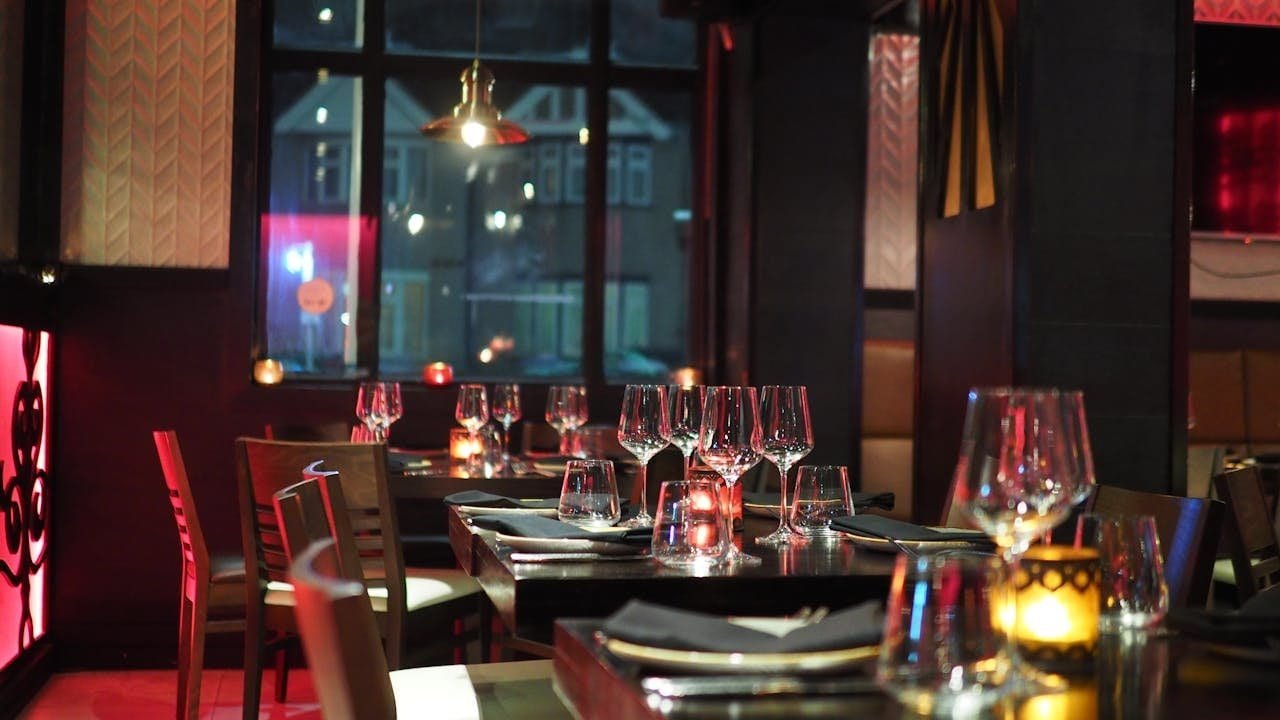
An independent 60-seat restaurant in a mid-size city in Latin America. A local cuisine concept, a $25 average ticket, lunch and dinner service, and no delivery at the start.
The restaurant owner had $100,000 available. The first budget said the opening would cost $87,000. “That was enough.” The problem was that it did not include the money to operate while the restaurant reached its break-even point.
The real budget
| Item | Amount |
|---|---|
| Build-out and remodeling | $40,000 |
| Equipment | $30,000 |
| Deposits | $5,000 |
| Licenses and permits | $3,000 |
| Opening inventory | $6,000 |
| Opening marketing | $3,000 |
| Initial investment | $87,000 |
| Contingencies (10%) | $8,700 |
| Working capital (4 months × $9,000) | $36,000 |
| Cash needed | $131,700 |
The difference between $87,000 and $131,700 was not a luxury: it was the difference between opening and surviving the first months.
The break-even point
With fixed costs of $9,000 a month and a variable cost of 32%, the contribution margin was 68%.
9,000 ÷ 0.68 = $13,235 a month
With a $25 ticket and 30 days:
13,235 ÷ 25 ÷ 30 = 17.6 covers a day
That was the floor. Not the goal, the floor.
The first four months
The restaurant did not reach break-even in the first month. The ramp was:
| Month | Sales | vs. break-even | Cash |
|---|---|---|---|
| Month 1 | $8,000 | −5,235 | 32,440 |
| Month 2 | $11,000 | −2,235 | 30,920 |
| Month 3 | $14,000 | +765 | 31,440 |
| Month 4 | $17,000 | +3,765 | 34,000 |
With four months of cash, the restaurant covered the ramp and reached break-even in month 3. If it had set aside only two months, it would have had to inject money or cut back before sales stabilized.
What was done right
- Separating investment from working capital. The restaurant owner did not confuse “opening” with “operating”.
- Setting aside contingencies. The build-out cost $4,500 more than budgeted; the cushion absorbed it.
- Negotiating the rent. A month of grace and a step-up in the second year were secured.
- Opening with controlled inventory. Nothing extra was bought to “fill the walk-in”.
- Measuring break-even from month 1. Pricing and shift decisions were made with numbers.
What was missing
- Six months of cash, not four. The ramp was slower in the second half of month 1.
- A marketing plan with a realistic budget. The $3,000 fell short for the first six weeks.
- A cushion for hiring. The team grew sooner than expected and fixed costs went up.
What I would do differently
- Set aside six months of fixed costs, not four.
- Do not spend the entire build-out budget before having a 20% contingency.
- Open with a shorter menu and grow later.
- Track sales by day and by shift from the first week.
- Set a spending limit for the first 90 days.
How to calculate your case
The opening budget calculator helps you add up investment, contingencies, and working capital. Then use the break-even point to find out how much you need to sell to sustain it.
Frequently asked questions
How many months of cash should I set aside?
It depends on the concept and the city. For an independent opening, 3–6 months of fixed costs is a starting point; if the build-out or the permit is delayed, more.
Does the budget include the owner’s salary?
If the owner works in the operation, yes. If not, include the cost of the person who performs that role. Working capital must cover the real operation.
Is this case real?
No. It is an illustrative case with composite figures to explain the method. We do not use client data without permission.
Can I open with less?
Yes, with a smaller format, less build-out, or an existing space. What is not advisable is opening without working capital and with the investment budget maxed out.